Separate fiber from technique
Silk is a fiber, not a weave. Cotton is also a fiber, while terms such as twill, gauze and plain weave describe ways threads can interlace. Dyeing adds another level of information, and embroidery adds threads after a fabric has been made. Keeping these categories separate is the simplest way to make a textile description more precise.
Silk has played a major role in prestigious Japanese clothing, but it does not account for all kimono. Bast fibers, including hemp and ramie, have long histories in clothing, while cotton became increasingly important during the early modern period. Access depended on place, income, trade and regulation. A history based only on spectacular silk robes can make ordinary work, summer comfort and household economies disappear.
Even a single fiber can produce very different cloth. Silk filaments and spun silk yarns do not create identical surfaces. Yarn twist, thickness, weave and finishing affect luster, drape and texture. A rough-looking cloth is not necessarily inexpensive, and a smooth surface is not proof of superior quality. Price and status reflect labor, rarity and social valuation as well as visible finish.
Patterns can begin before the loom
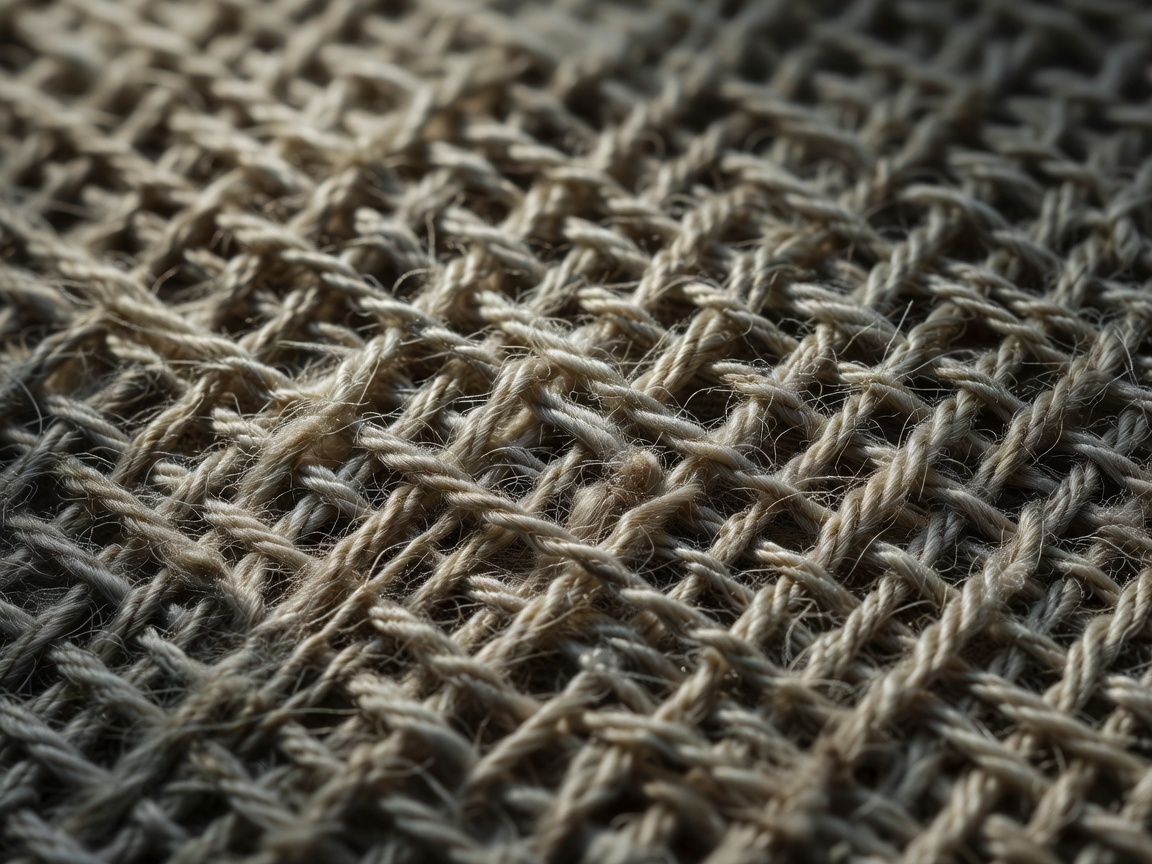
In a woven pattern, the arrangement of threads contributes directly to the design. Some fabrics use contrasting yarn colors; others create motifs through differences in structure or light reflection. A monochrome cloth may therefore carry an elaborate pattern even before any surface decoration is added. Looking in raking light can reveal effects that a straight-on photograph misses.
Kasuri is commonly described in English as an ikat technique. Selected sections of yarn are resisted before weaving, so a pattern emerges as the prepared threads are aligned on the loom. Its characteristic softened edges belong to the relationship between dyed yarn and structure. It should not be confused with a blurred print applied to an already woven cloth.
Place names can also carry technical and commercial histories. Nishijin in Kyoto is strongly associated with sophisticated weaving, including textiles used for obi. Yet a regional label should not be treated as one unchanging product. Production involves different workshops, specializations, technologies and market demands. Ask which process a source describes, rather than assuming a place name explains every object made there.
Resist dyeing is a family of methods
Resist processes prevent dye from reaching selected areas. In shibori, cloth may be bound, stitched, folded or clamped to create that resistance. Different methods leave different marks, and complex designs can require extensive preparation. Arimatsu and Narumi are well-known centers associated with shibori production, but the term covers techniques rather than one single regional look.
Yūzen is associated with paste-resist dyeing that allows detailed, often pictorial decoration. The name is connected with Miyazaki Yūzensai, a designer active in Kyoto around the late seventeenth century. Production can involve drawing, applying resist, coloring, steaming and washing, sometimes distributed among specialists. A garment described as yūzen is not necessarily the work of one person executing every stage.
Stencil-resist methods are another important branch. Cut stencils allow the controlled repetition of motifs, from bold shapes to tiny patterns that can appear almost solid at a distance. The scale of a design changes how it reads on a moving body. Seen close up, a restrained garment may reveal remarkable precision; viewed across a room, the same surface may communicate quiet uniformity.
Decoration can cross technical boundaries
Embroidery, couching and metallic threads may enrich dyed or woven fabric. Decorative work can emphasize a motif, create relief or introduce reflections that move with the wearer. These techniques are not mutually exclusive categories. A careful museum description may list several because the object really does combine several kinds of work.
Pattern placement matters too. A design planned across the seams of a finished garment makes a different demand on production from an all-over repeat cut into panels. Look at whether motifs continue across joins, where the largest elements sit and which areas become hidden when the garment is worn. The relationship between cloth and cut is part of the design, not an afterthought.
Materials change with technology and use
Industrial spinning, mechanized weaving and synthetic dyes expanded textile possibilities during the modern period. Later, regenerated and synthetic fibers added further choices. These developments did not simply replace all older processes. Handwork, machine production and mixed workflows can coexist, and a modern textile can incorporate techniques with much longer histories.
For an actual garment, avoid identifying fiber or age from a photograph alone. Linings may differ from outer fabrics, repairs may introduce later materials, and fading can distort color. Historical interest is not the same as market value. Consult a qualified textile conservator before cleaning or treating an important object; a general history guide cannot establish a safe care method for unknown dyes and fragile fibers.
| Term | Category | First question to ask |
|---|---|---|
| Silk, cotton, ramie | Fiber | What is the yarn made from? |
| Kasuri | Yarn-resist patterning | How were yarns prepared and aligned? |
| Shibori | Shaped-resist dyeing | What resisted the dye? |
| Yūzen | Paste-resist dyeing tradition | How was the detailed design produced? |